1. Pre-attentive perception
Pre-attentive processing is the subconscious accumulation of information from the environment.
If we’re aware about preattentive perception, we can make information easier to understand. We can use our knowledge to help organize information and create designs that work with the human mind and not against it. Thus information can be placed in a way where we can garner the users attention with very little effort.
A realistic scenario where we would meet our poster is:
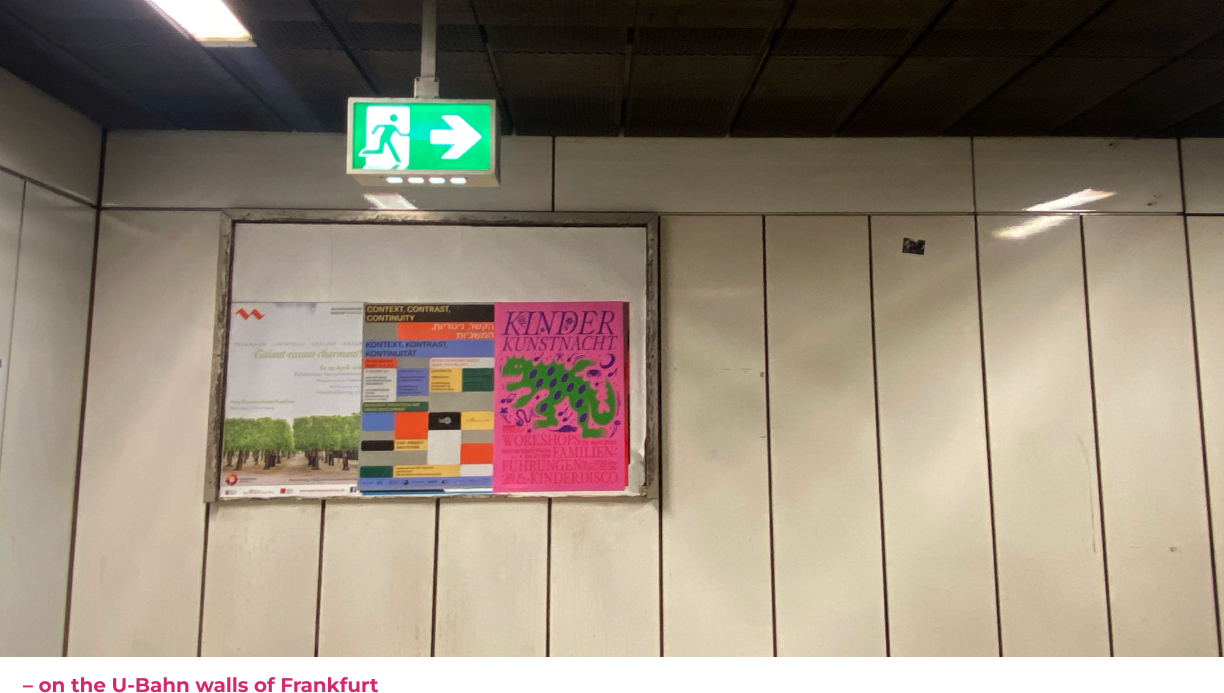
So, in this chapter our analysis will reveal what people see in the first few milliseconds in the surroundings like this, and how we can design for this moment.
1.1 Peripheral Vision Experiment
Idea: we assume that poster is first coming in to view with peripheral vision. And we want to find out what can be seen then.
To experience foveal and peripheral vision, i made an experiment. I put the poster on my smartphone screen, raised left arm in front of me, stared at my thumb. And then moved the smartphone with my right arm from afar towards your left thumb.
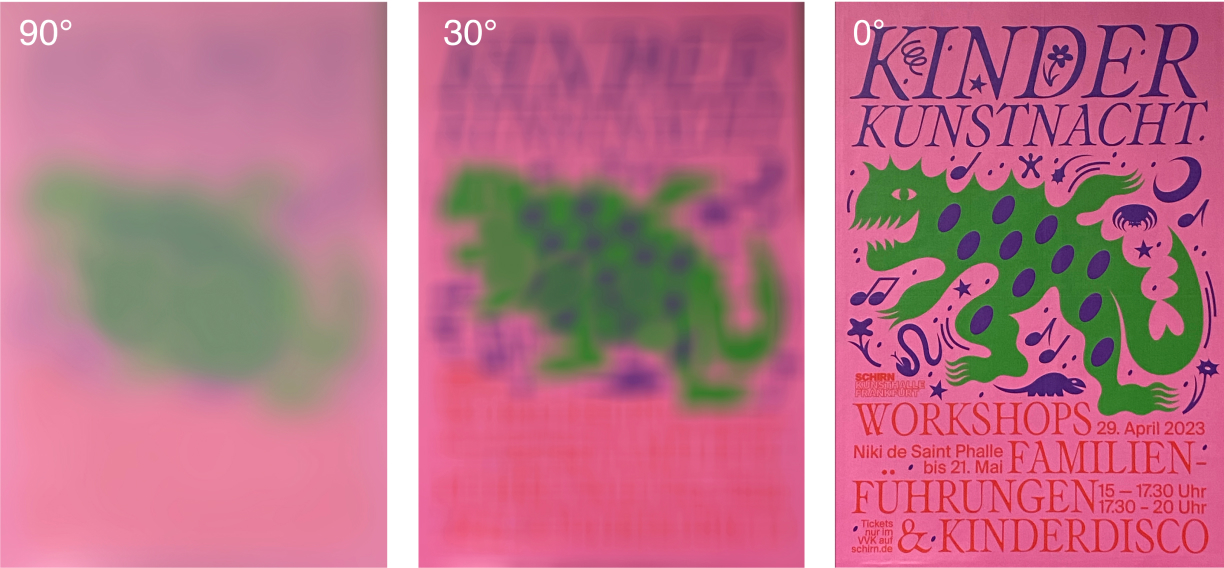
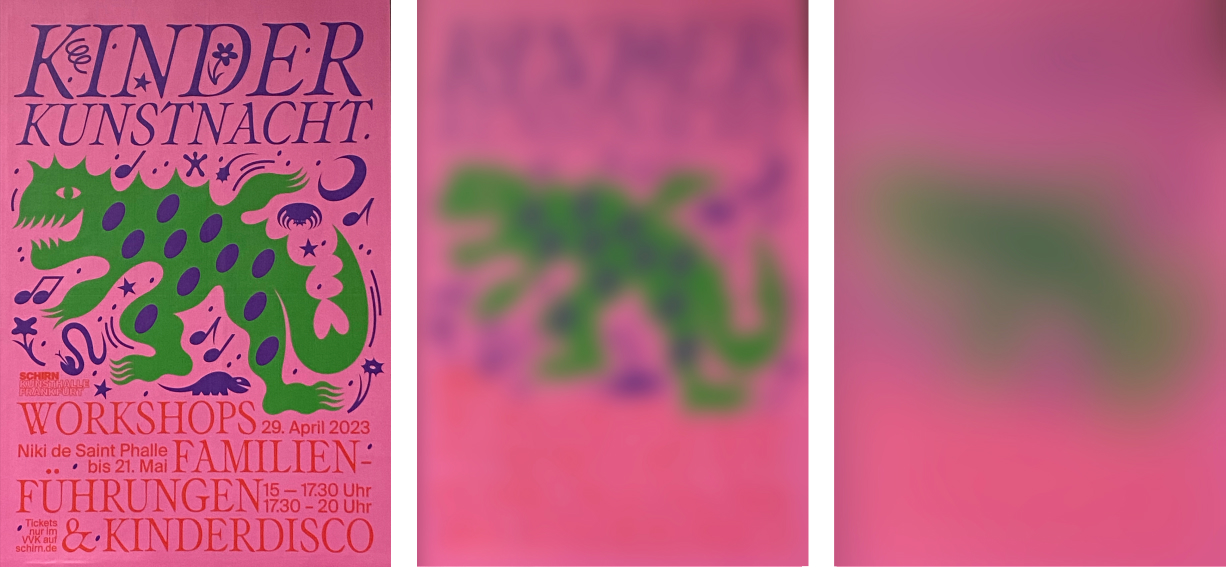
At 90° the poster appears to be a pink picture with dirty green/grey on the centre.
Then I move my hand to 30°, the poster becomes a little bit brighter. It’s possible to notice a pattern of violet letters and ovals. The finer details, such as the dinosaur's legs and the font, are still not noticeable.
1.2 Showing some people the poster for just some milliseconds!
Idea: by showing something very briefly we get hold of early processing. We use a quick-viewer – the Tachistoscope.

People definitely grasp the two primary colors and the text. Some understand that this "monster", the main character, is probably a dinosaur. One person thought about movie poster, considering the text + character (actually no idea, i guess it was personal, because it also could be a book cover).
I noticed that it was very difficult to explain to people what I want to hear from them. I had to say something like "tell me, what color or shape have you seen", and maybe because of that the experiment is not really clear :(
1.3 Checking with Gestalt principles
Gestalt principles are a set of psychological principles that describe how humans perceive and make sense of visual information automatically. We can use them to find out, again, what people see without effort.
The factor of proximity
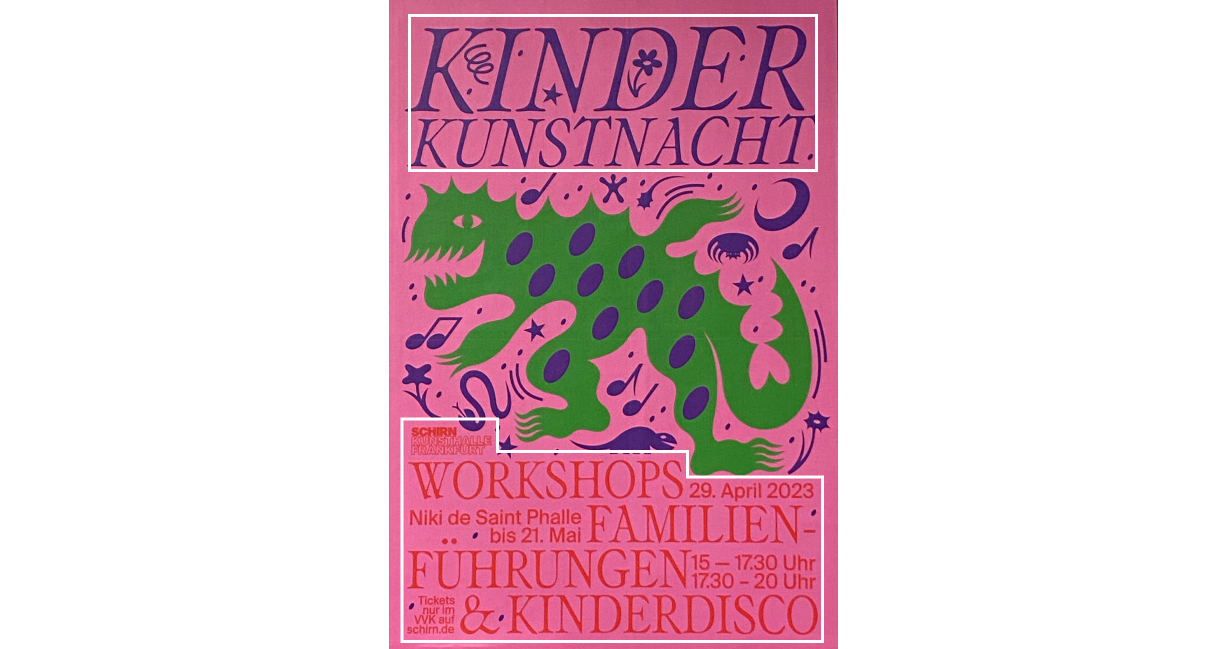
Visual elements that are close to each other get grouped. It very often happens with letter and lines in text blocks. Because of this factor we can read and separate one piece of text from another.
The factor of similarity
This factor works when elements have similar shape, size, orientation or color. I can see a lot of stuff like this in this poster. For example I can as a group or a pattern these violet tiny things around the monster, because they have similar color. But in this group I can separate one another group, which consists of violet ovals (same shape and even same direction (factor of direction)). Also the monster itself feels like a group because of the pattern on his spine and teeth/claws relation.
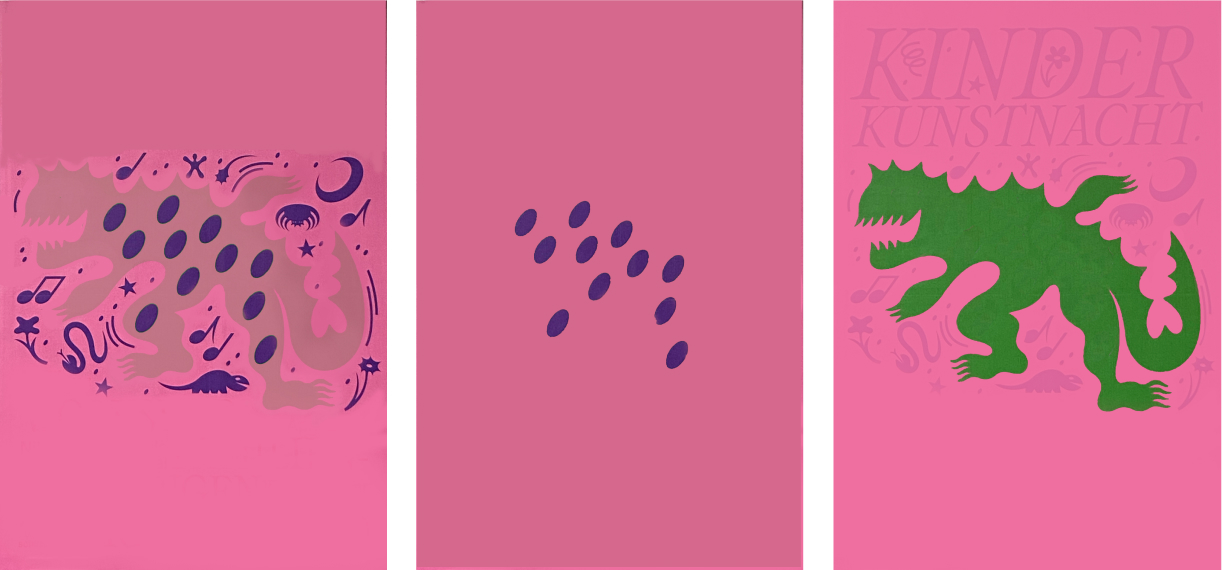
The factor of closure
also helps to separate the monster from the violet pattern.
Finally,
I think, the figure-ground separation is clear here.
The ground doesn’t have a similar color, shape, or anything else similar with the main character, even after extreme blurring we can see two spots and identify the figure and the ground.
Additionally,
I think something interesting happened with the text on the bottom of the poster. Red colour is too similar to the pink background, that's why it actually barely exists. People can identify it only if they are very close to the poster. Maybe it's not bad because it helps people to focus on the word “kinder” and the monster/funny dinosaur, and if they feel interested, they can approach and discover more specific information about the event.
1.4 What do we really look at?
Eye tracking
At the beginning, viewers look at the center of the upper text, and presumably grasp the meaning without reading it from left to right. Then they look at the dinosaur, maybe trying to assure themselves of the event. Then they feel like "ok, it seems like something interesting", they start to read the first line of the bottom text, etc.
The heatmap generally confirms the above.